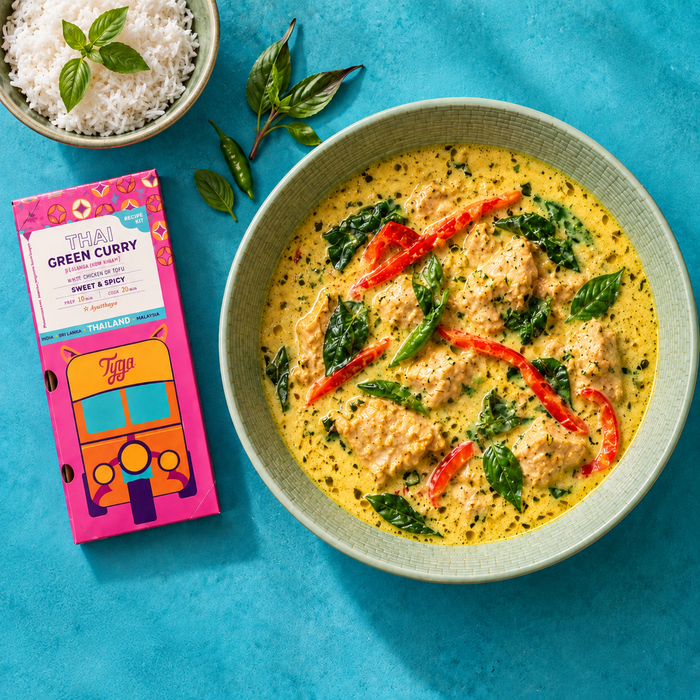
Thailand / Creamy & fragrant
Green Thai Curry
Coconut milk, fresh chilli and spices bring the aromatics together in a creamy curry.
Cook this dish ↗
Why Tyga? / A little box. A bigger story.
Spices bring warmth. Pastes bring aromatic depth. You bring the fresh ingredients. Together, they turn “what’s for dinner?” into somewhere worth going.

Convenience meets authenticity
You want the layers of flavour that make a dish special. You also have a Tuesday evening to get through.
Tyga bridges that gap with measured spices, prepared pastes and the sauces or stocks each recipe calls for. The specialist ingredients come together in one kit; you add the fresh ingredients and cupboard essentials, then cook with a clear recipe card.
Less searching for galangal. More time enjoying what it brings to your curry.
Warmth, fragrance, colour and character, measured for the recipe.
Prepared aromatics, with sauces and stocks where needed, to build the next layers.
Vegetables, your choice of protein and the cupboard essentials on the shopping list.
Contents vary by recipe. Fresh ingredients and serving accompaniments are purchased separately. Check each kit’s ingredients, allergens and recipe before choosing.
The science behind the delicious bit
Your tongue detects tastes such as sweet, sour, salty, bitter and umami. Your nose brings the aromas. Temperature, texture and sensations such as chilli heat join in.
That is why simply making a dish hotter does not make it more flavourful. A fragrant curry needs several parts working together.
Crushing and grinding release aromatic oils from plant tissues. Different ingredients contribute different aroma compounds, which combine as you cook. Our kits help you build those layers in sequence.
Lemongrass, makrut lime, galangal and spices give Green Thai Curry its aromatic character.
Fish sauce contributes salty, savoury notes; the recipe’s honey adds sweetness.
Fresh green chilli, ginger and black pepper contribute different kinds of pungency.
The coconut milk you add gives the curry its creamy body.

The fragrant paste / Small sachet. Big part to play.
Dry spices and prepared aromatics do different jobs. Our fragrant paste brings four distinctive ingredients together, ready to join the spices and fresh ingredients in your pan.
A bright, lemony, green opening.
A vivid, unmistakably citrus character.
Warmth and a lively, pungent lift.
A sharper, almost pine-like aromatic note.
These are the principal aromatics, not the complete ingredient list. Our pastes are prepared ingredients; full ingredients and allergens are listed on each kit’s product page and packaging.
Same aromatics. Different adventures.
The fragrant paste is a common thread. The spices, fresh ingredients and cooking turn it into three very different meals.
Thailand / Creamy & fragrant
Coconut milk, fresh chilli and spices bring the aromatics together in a creamy curry.
Cook this dish ↗
Laos / Fresh & savoury
Fresh herbs and crisp lettuce take the same aromatic thread in a lighter, crunchier direction.
Cook this dish ↗
Malaysia / Nutty & aromatic
Warm spices, grilled skewers and the peanut sauce you make give the aromatics a new setting.
Cook this dish ↗Cooked dishes show serving suggestions. Follow each recipe’s shopping list; fresh ingredients and accompaniments are not supplied.
The Tyga table of flavour
Start recognising the notes in your food. These are culinary descriptions, inspired by the book’s flavour table—not chemical symbols or a strength scale.
Lemony · green
Sharp · pine-like
Floral · resinous
Sweet-smelling · woody
Citrus · rounded
Earthy · gently bitter
Liquorice · woody
Hot · fruity
An ingredient can sit in more than one flavour family. This is an invitation to notice, smell and taste.
From the Tyga book / 200 culinary entries
A seed, a leaf, a bark, a berry. Our Silk & Spice cabinet brings together 200 spices, herbs, preparations and blends. Spot the familiar, discover something new, then reveal the illustrated key.


Silk & Spice / The story behind the collection
The Silk Roads were a changing network of land and sea routes connecting communities across Asia, the Middle East, Africa and Europe. Alongside silk travelled spices, knowledge and ways of cooking.

Caravans moved between oasis towns and trading cities. Goods passed through many hands: an ingredient could travel much farther than any one merchant. Encounters brought new tastes, ideas and skills.
Maritime routes linked the Indian Ocean with Southeast Asia and beyond. Spices such as pepper, cinnamon, cloves and nutmeg travelled through ports and markets, becoming part of kitchens far from where they grew.
Chillies originated in the Americas. After transatlantic exchange began in 1492, they spread into Africa and Asia. Local cooks made this newcomer their own—a reminder that food traditions keep evolving.
The Tyga map / Colour, place & flavour
From the pepper coast to the spice islands. Follow the connections, then let a place inspire your next meal.

Our Silk Road collection celebrates that curiosity and exchange. These are dishes for today, inspired by living food traditions, with their own regional stories. Each recipe is another place to begin.
Spices & eating well
Herbs and spices have long belonged to both kitchens and traditions of care. For everyday cooking, start with what is on your plate: variety, balance and food you enjoy making.
Try a different vegetable in your week’s cooking. Beans, lentils, vegetables and wholegrains can add fibre and variety to your meals; herbs and spices bring new ways to enjoy them.
The NHS suggests herbs, spices, garlic, chilli and lemon as ways to add flavour instead of extra salt. Taste before adding more: sauces, stocks and prepared pastes can already contain salt.
Your protein, vegetables, accompaniments, portions and the amount of oil or coconut milk all shape the finished meal. A pinch of spice is one part of a much bigger picture.
Ginger, turmeric and cinnamon have long histories in food and traditional care. Modern research asks different questions: which preparation, in what amount, and with what evidence?
Many studies use concentrated extracts or supplements. Their findings cannot simply be transferred to a spoonful in a curry, or to a Tyga kit. Our focus here is flavour and practical ideas for a varied diet; we do not claim that our kits prevent or treat health conditions.
Your world. Your kitchen.
A new favourite for tonight. Four cooking adventures to give someone. Pick a dish, gather your fresh ingredients and follow your curiosity.
Inspired by Tyga’s Silk & Spice working book: the fragrant paste, table of flavour, sensory portraits and histories of exchange. Factual background checked against the sources below. Ingredient information comes from our current product pages; always check your pack.